Contact Us
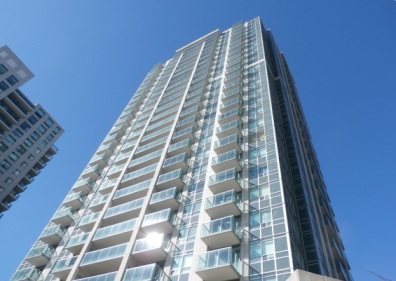

Parry Sound, Ontario has a modest but well-defined condominium sector that owners and property managers must keep in mind when planning a Reserve Fund Study. As of 2021, Statistics Canada lists 350 occupied condominium dwellings in the town, grouped into 15 separately registered corporations under the Parry Sound land-registry office. While small in absolute terms, this inventory is growing, giving rise to a steady need for sound reserve-fund forecasting tailored to northern Georgian Bay conditions.
All 350 recorded condominium units are classified as residential, giving residential condominiums a full 100 per cent share of the local condo market; no commercial or industrial condominium corporations appear in the public record. Most of these homes are clustered along the scenic waterfront at Salt Dock Road and Beaconview Heights, where residents enjoy amenities such as communal lounges, fitness areas, landscaped gardens and convenient trail access. These lifestyle features add additional components—party rooms, elevators, exterior patios and exercise facilities—that must each be costed as part of any Reserve Fund Study in Parry Sound, Ontario.
Public filings show that 14 of the 15 corporations use the PSCC prefix, confirming them as Parry Sound Standard Condominium Corporations, while one corporation is registered as PSCECC 18, a Parry Sound Common Elements Condominium Corporation that serves cottage lots near Magnetawan. Vacant-land condominium corporations are not present in the district. Parry Sound’s earliest condominium conversion dates to the early 1970s, when two mid-rise apartment blocks on Beaconview Heights were turned into condos; today’s pipeline includes the five-storey Lighthouse building with 43 new suites, illustrating a half-century continuum that Reserve Fund Study professionals must reflect in their depreciation schedules.
Looking forward, the Smart Prosperity Institute projects a requirement for 3,737 additional homes across the Parry Sound census division between 2021 and 2031, signalling that mid-rise waterfront condominiums will remain a key delivery format. Condos already represent roughly 11 per cent of all occupied dwellings in the town (350 of 3,195), and that share is poised to edge higher as new multi-unit projects come on stream. For engineers and boards planning a Reserve Fund Study in Parry Sound, Ontario, the evolving mix of standard (PSCC) and common-element (PSCECC) corporations—and the local preference for poured-concrete, ICF and precast construction—makes accurate life-cycle costing and inflation indexing more important than ever.