Contact Us
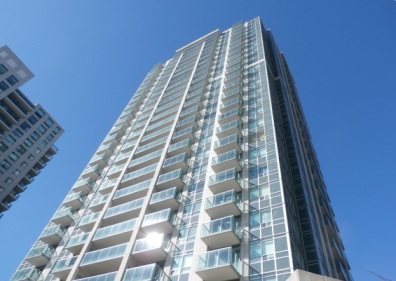

Ajax, Ontario has evolved into a condominium-friendly community with roughly 3,800 condominium units dispersed across the town. About nine-tenths of that inventory serves a residential purpose, while the balance is split between small-format commercial lofts and industrial flex-condo bays in business parks. A Reserve Fund Study for Ajax must recognise that most local buildings are conventional apartment-style complexes complemented by clusters of condo townhomes, all of which collectively account for close to 28 per cent of the municipality’s total housing stock—an influence that continues to grow as new projects come on stream.
In Ajax the bulk of residential condominiums are low-rise or stacked-townhouse formats; approximately two-thirds are five storeys or fewer, one-fifth can be classed as mid-rise (six to twelve storeys) and barely 15 per cent rise higher. Roughly 80 per cent are standard condominium corporations, 18 per cent are common-element schemes and only a handful—around two per cent—are vacant-land plans. Amenities now commonly audited in a Reserve Fund Study include fitness studios, social lounges, rooftop or podium terraces, children’s play zones, pet wash stations, indoor pools, parcel lockers, bicycle storage and emerging necessities such as EV charging hubs.
Residential towers and stacked towns are concentrated around Downtown Ajax near Harwood Avenue, the Durham Region Transit and GO rail corridors, and along the waterfront precinct east and west of Lake Driveway. Commercial condominium lofts tend to line Kingston Road and Bayly Street, whereas small industrial condominium blocks cluster in the Salem Road employment area. Condominium construction first appeared in the mid-1970s, accelerated through the late 1980s and early 2000s, and is forecast to deliver a further 2,500 to 3,000 units over the next decade—primarily mid-rise, mixed-use developments that will demand disciplined Reserve Fund Study planning.
Local listings rarely cite full corporate names; instead, abbreviations prevail. Buyers will encounter designations such as “DSCC” or the earlier “DCC” for Durham Standard Condominium Corporation numbers, “DCECC” for common-element files and “DVLCC” for vacant-land plans, along with shorthand tags like “CE”, “STD” and “VL” in marketing material. A Reserve Fund Study in Ajax should reference these identifiers to distinguish each asset class clearly and to benchmark contribution schedules appropriately against detached, freehold townhouse and commercial-industrial property sectors.